
Engineering • 2025-05-02
Façade Glazing Engineered for Saudi Extreme Heat
DSCC Envelope Engineering
Solar gain control, glass selection, and thermal break strategies for Saudi facades that perform — and look incredible.
A glass tower in Riyadh in July faces 1,000+ W/m² of direct solar gain on the south and west facades. Engineering this exposure without turning the interior into an unhabitable greenhouse — or driving up cooling costs by 40% — requires a layered facade strategy.
We start with a low solar heat gain coefficient (SHGC) glass package. For Saudi commercial work, SHGC of 0.22-0.28 paired with a visible light transmittance of 50-65% gives clients daylight without thermal punishment. We typically specify a soft-coat low-E on surface 2 of an insulated glazing unit, with argon gas fill and a warm-edge spacer.
Next, the aluminum framing must use polyamide thermal breaks rated to U-value 1.4 W/m²K or better. Without this, the frame becomes a thermal bridge that defeats the high-performance glass. For ultra-luxury work, we move to triple-glazed units with two low-E coatings, achieving overall U-values below 1.0.
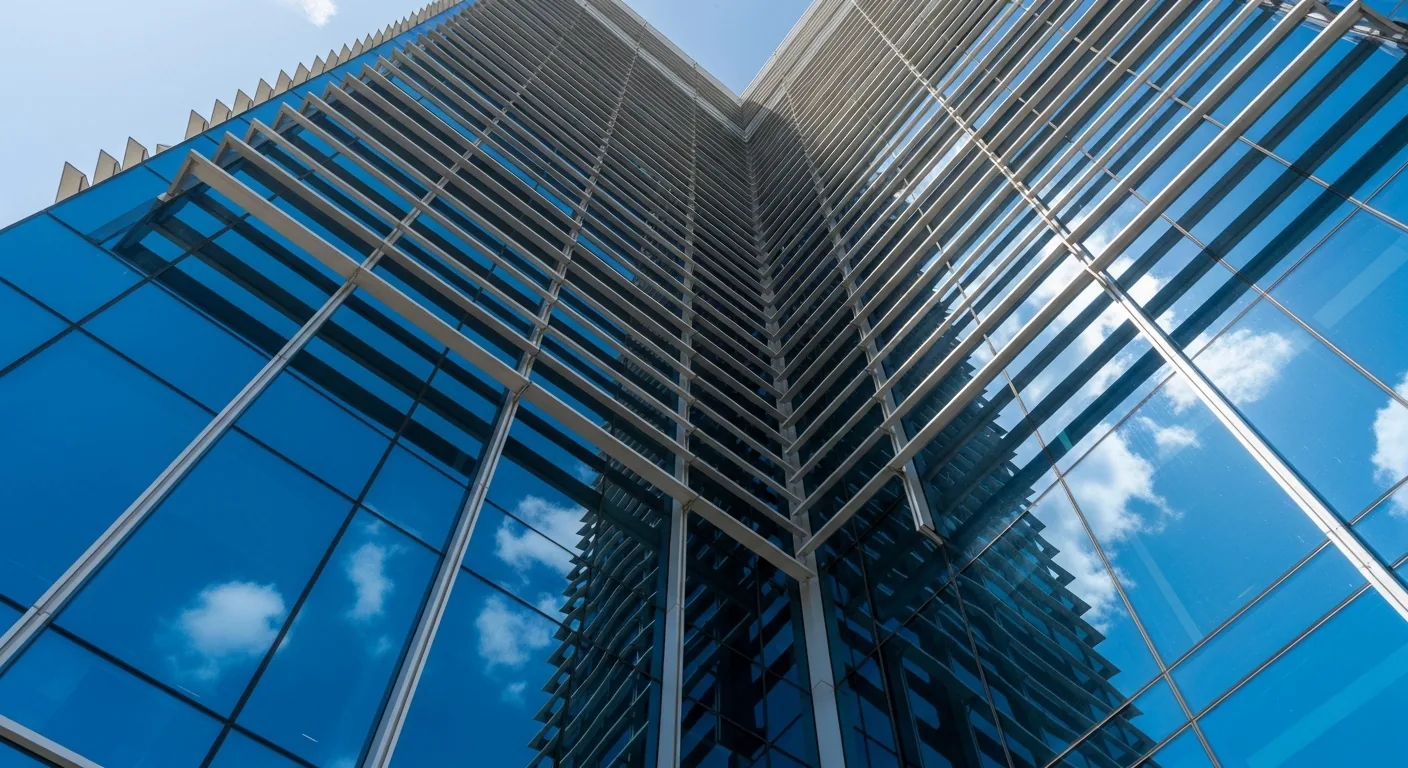
We also engineer external shading — fritted patterns, projecting fins, or perforated screens — that dramatically reduce solar gain on south and west exposures. A well-designed external shading device can outperform a more expensive low-SHGC glass package while preserving views and daylight.
Finally, we integrate facade performance with the BMS so operators can monitor surface temperatures, condensation risk, and thermal stress in real time. This data feeds maintenance schedules and validates warranty claims when needed.
Related services